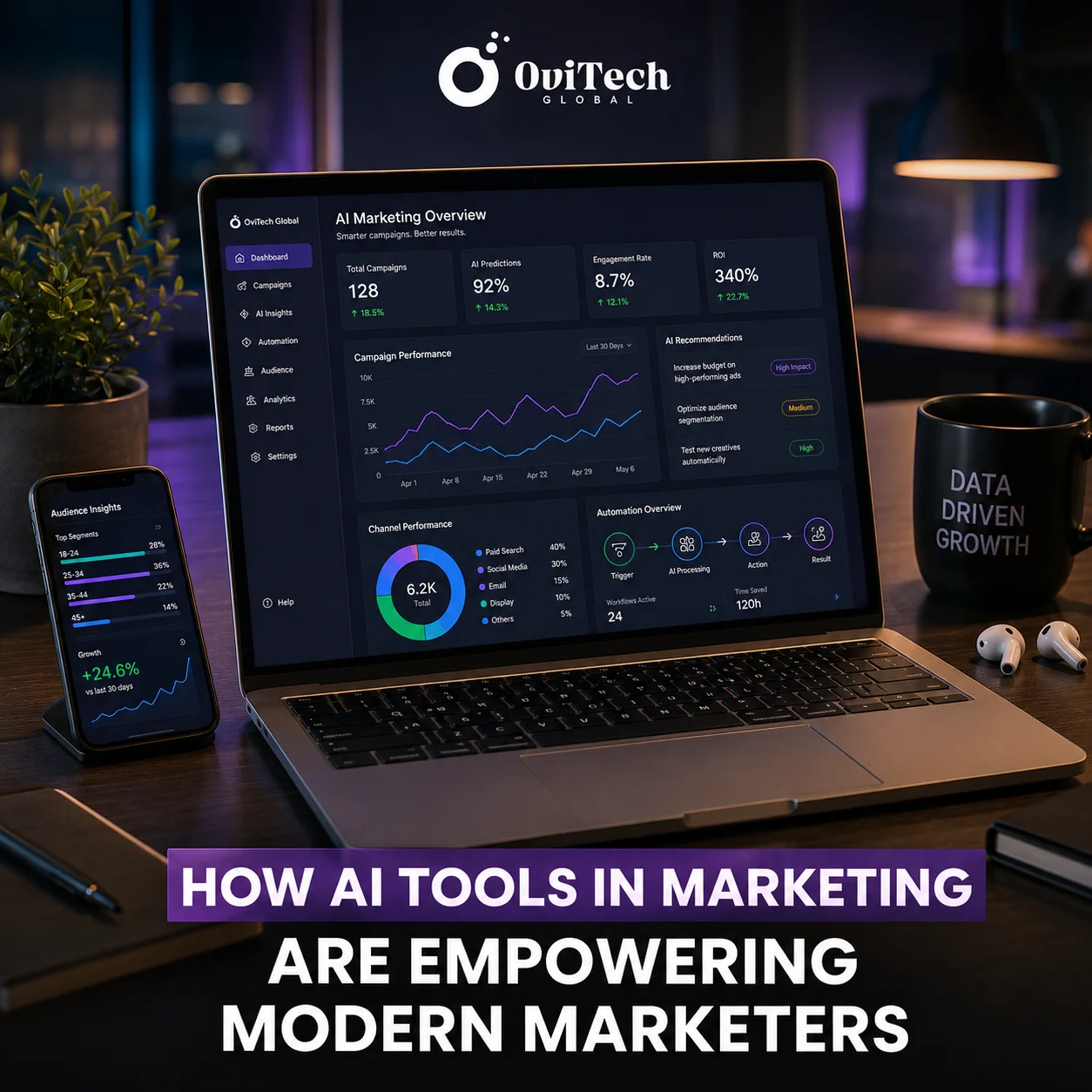
In today’s digital landscape, AI tools in marketing are transforming how businesses create, manage, and optimize their marketing strategies. But as much as AI is revolutionizing the industry, one thing is clear: AI tools won’t replace marketers; they’ll empower them. Rather than replacing jobs, these AI-driven marketing tools help marketers work more efficiently and make smarter decisions. They serve as a supportive force, enhancing marketers' capabilities and enabling them to achieve more efficient, data-driven results. In this blog post, we’ll explore how AI marketing automation tools are reshaping the landscape and why human expertise remains essential to a successful marketing strategy.
How AI Tools Are Transforming Modern Marketing
AI has already made significant strides in the marketing sector. With AI marketing automation tools, businesses are able to analyze vast amounts of data, optimize campaigns in real time, and personalize customer experiences at scale. However, while AI can automate repetitive tasks and provide valuable insights, it cannot replace human creativity, emotional understanding, and strategic thinking.
Empower Marketers with AI: The Human Touch
One of the most significant advantages of AI in marketing is that it empowers marketers rather than replaces them. AI tools can handle repetitive tasks such as data analysis, customer segmentation, and campaign tracking. But the creative strategy, content creation, and deep understanding of customer behavior are areas where human marketers still excel.
Marketers can leverage AI-driven marketing tools to:
- Automate time-consuming tasks: Tasks like email segmentation, social media posting, and lead nurturing can be automated using AI, freeing up time for marketers to focus on more strategic activities.
- Gain insights from data: AI tools in marketing can analyze customer behavior and preferences, allowing marketers to tailor their campaigns to the right audience and refine their messaging.
- Personalize customer experiences: AI-powered personalization tools use customer data to deliver tailored content and offers, improving engagement and conversion rates.
By using AI to enhance these areas, marketers can make more informed decisions and drive better results. Popular platforms like HubSpot and Salesforce already use AI-powered automation to improve campaign performance, providing real-world use cases of how AI can empower marketers.
How AI Marketing Automation Improves Efficiency
AI marketing automation is a game-changer when it comes to improving efficiency. With automation, marketers can ensure that campaigns are running smoothly, with less manual intervention, and at scale. Here's how AI marketing automation can make a significant impact:
1. Better Data-Driven Decisions
With AI tools, marketers can process and analyze large volumes of data in real-time. This gives them the ability to quickly identify trends, consumer preferences, and gaps in their strategies. By harnessing the power of AI, marketers can make more data-driven decisions that enhance campaign effectiveness.
For example, Google Analytics and Marketo are trusted platforms that use AI to analyze user behavior on websites, helping marketers to make data-backed decisions about content and engagement strategies.
2. Enhanced Customer Segmentation
Customer segmentation is one of the most important aspects of digital marketing. AI tools can analyze customer data, such as behavior, purchasing habits, and online activity, to create more accurate and granular customer segments. These segments allow marketers to create highly personalized campaigns that resonate with each group, driving higher engagement and conversion rates.
AI tools can even update and optimize these segments automatically based on new data, ensuring that campaigns are always targeting the most relevant audience.
3. Optimized Content Creation and Distribution
AI-driven content creation tools can help marketers automate the process of generating blog posts, emails, social media updates, and more. These tools can analyze what type of content performs best for a particular audience and even suggest improvements to existing content. With the ability to personalize content at scale, marketers can reach their audiences with highly relevant messaging without sacrificing quality.
Furthermore, AI can optimize content distribution by determining the best times and channels to engage with each customer segment, improving both reach and engagement. Tools like BuzzSumo and SEMrush use AI to help marketers understand the performance of their content across multiple channels.
How AI-Driven Marketing Tools Empower Marketers
While AI tools have the ability to automate various tasks, they cannot replace the need for human input when it comes to high-level decision-making and strategy. Here are a few ways in which AI-driven marketing tools empower marketers:
1. Predictive Analytics for Smarter Campaigns
Predictive analytics is one of the most powerful AI tools in marketing. It allows marketers to predict future customer behavior and trends based on historical data. This helps marketers create campaigns that are not just reactive but proactive, anticipating customer needs and preferences.
For example, IBM Watson Marketing uses predictive analytics to help marketers understand customer behavior and optimize their campaigns.
2. Real-Time Campaign Optimization
AI marketing automation tools can monitor campaigns in real time and adjust them based on performance. If a particular ad is underperforming, AI can quickly adjust the budget or change the targeting to ensure that the campaign remains effective.
For instance, Facebook Ads and Google Ads use AI to optimize bids automatically and adjust campaign parameters based on real-time performance, helping marketers achieve the best results with minimal effort.
3. AI Tools in Customer Support
AI-driven tools are not limited to marketing; they also play a crucial role in customer service. Chatbots, for example, can provide instant support to customers, answering common queries and resolving issues without the need for human intervention. This not only improves the customer experience but also frees up marketing teams to focus on more strategic tasks.
Platforms like Zendesk and Drift offer AI-powered chatbots that provide customer support while enhancing the customer journey.
Why Marketers Are Essential in the AI Age
Despite the numerous benefits of AI-driven marketing tools, marketers remain essential in the AI age. Here's why:
- Creativity: AI tools can analyze data and automate tasks, but they cannot replicate human creativity. Marketers are responsible for developing compelling content, designing creative strategies, and understanding the nuances of customer emotions, something AI is still far from mastering.
- Strategy Development: AI tools provide valuable insights, but it’s the marketers who must interpret that data and craft strategies that align with business goals. Human expertise is needed to navigate the complexities of brand identity, consumer psychology, and market trends.
- Ethical Considerations: Marketers must ensure that AI is used ethically and responsibly. This includes being transparent about data collection practices and ensuring that AI algorithms don’t inadvertently reinforce biases.
Conclusion: AI and Marketers: A Symbiotic Relationship
AI tools are undoubtedly reshaping the marketing landscape, but they are not here to replace marketers. Instead, they empower marketers to be more efficient, data-driven, and strategic. By automating routine tasks and providing real-time insights, AI-driven marketing tools allow marketers to focus on what they do best: creating innovative campaigns, building brand identity, and connecting with customers in meaningful ways.
The future of marketing lies in the symbiotic relationship between humans and AI. Marketers who embrace AI as a tool for empowerment, rather than replacement, will be the ones who succeed in the evolving digital marketing landscape.
FAQs
1. How do AI tools in marketing improve customer targeting? AI tools in marketing analyze customer data to segment audiences based on behavior and preferences. This allows marketers to create highly personalized campaigns that resonate with each audience, improving engagement and conversion rates.
2. Can AI marketing automation replace human marketers? No, AI marketing automation can handle repetitive tasks, but human expertise is still essential for strategic decision-making, creativity, and understanding customer emotions.
3. What are some examples of AI-driven marketing tools? Examples of AI-driven marketing tools include predictive analytics platforms, customer segmentation tools, AI content generation tools, and chatbots for customer support.
4. How does AI help in content personalization? AI tools analyze customer behavior and preferences to deliver personalized content, offers, and recommendations, improving the overall customer experience and driving higher engagement.
5. What are the benefits of AI marketing automation? AI marketing automation saves time by automating tasks like email segmentation, lead nurturing, and campaign tracking. It also allows for real-time campaign optimization and personalized customer experiences.
6. Why is human creativity still important in marketing? While AI can analyze data and automate tasks, human creativity is needed for crafting compelling stories, understanding customer emotions, and developing innovative strategies that resonate with the target audience.